You burnt your pan and you're wondering if it's ruined? Don't throw it away. A burnt pan is twenty-five to eighty dollars down the drain — and in ninety-five percent of cases, baking soda rescues it in ten minutes.
01 / 05Why it sticks what happens at the bottom
Before cleaning, understand why burnt food sticks so hard.
Caramelized sugars
When heat goes past three hundred and twenty degrees Fahrenheit, natural sugars in food caramelize then carbonize. They turn into a hard, black, sticky layer that chemically bonds to the metal. The longer the pan cooks dry, the stronger that bond gets.
Bonded proteins
Proteins from meat and legumes do the same thing: they denature, coagulate and grip the microscopic surface texture. The result is a double layer — carbonized sugars plus bonded proteins — that cold water alone can't lift off.
02 / 05Baking soda method three steps, ten minutes
Here's the main method — it works on stainless steel, carbon steel and non-stick coatings without damaging them.
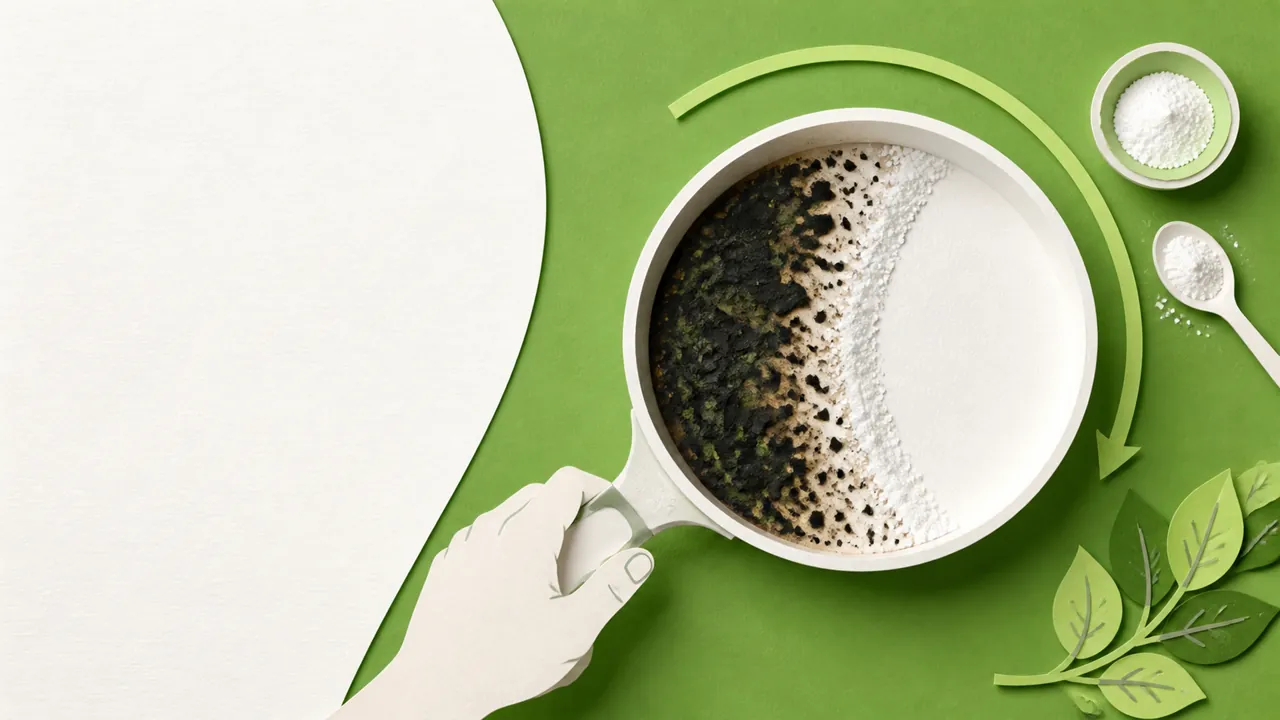
3 tbsp baking soda + water
Pour enough water into the pan to cover the burnt bottom — about half a liter or two cups. Add three level tablespoons of baking soda. No vinegar at this stage — mixed together, baking soda and vinegar neutralize each other. Stir gently to dissolve.
Simmer 10 min on low heat
Place the pan on medium heat and bring to a boil. Reduce to low and let it simmer for ten minutes. The alkaline heat from the baking soda softens the carbonized layer and breaks the chemical bonds. You'll see black flakes starting to lift on their own.
Wooden spatula → rinse
Remove from heat, let it cool for five minutes. Gently scrape with a wooden or silicone spatula — never metal. The bottom should clean up in a few passes. Rinse with hot water and repeat if any spot still resists.
03 / 05White vinegar alternative stainless steel only
If you have a stainless steel pan and baking soda wasn't enough, white vinegar is your plan B.
50/50 vinegar + water, 5 min
Mix equal volumes of white vinegar and cold water in the pan. Bring to a boil and simmer five minutes. The acetic acid in the vinegar attacks mineral deposits and food residue that baking soda couldn't shift. This method is stainless steel only — vinegar damages non-stick coatings.
Scrape, dry immediately
After simmering, scrape with a wooden spatula then rinse with hot water. Dry immediately with a clean cloth — stainless steel left wet leaves white water spots. Result: spotless, shiny bottom with no residue.
04 / 05Mistakes to avoid three moves that cause damage
Before you clean, here's what you absolutely must not do — each mistake can make the pan permanently unusable.
❌ Steel wool = scratched coating
Steel wool and metal scrubbing pads scratch non-stick coatings and brushed stainless steel. Once scratched, the coating releases particles and loses its effectiveness. Use steel wool only on bare, uncoated cast iron.
❌ Cold water on hot cast iron
Pouring cold water into a still-hot cast iron pan causes violent thermal shock. Cast iron can crack or warp. Always let your cast iron cool to room temperature before rinsing — five to ten minutes is all it takes.
❌ Bleach on aluminum
Bleach oxidizes aluminum deeply and leaves permanent black stains. It can also degrade certain coatings. For aluminum, baking soda only — never any chlorine-based product.
05 / 05Preventive care stop it happening again
The best cleaning is the one you never have to do. Two simple habits eliminate ninety percent of burnt-on incidents.
Oil first + medium heat
Always preheat your pan empty for thirty seconds on medium heat, then add oil before the food. The oil creates a physical barrier between food and metal. Avoid high heat at the start — most burning happens in the first two minutes.
Never dry + keep watch
Never preheat an empty pan for more than a minute — non-stick surfaces degrade when dry above five hundred degrees Fahrenheit. If you leave the kitchen, lower the heat. A few seconds of inattention is all it takes to turn dinner into disaster.
This advice is general information and does not replace a professional's opinion. When in doubt (health, electricity, chemicals), ask a specialist.
Sources
Want more tips like this one?
Subscribe to the channel