Everyone knows how to cook pasta — and yet nine out of ten home cooks repeat the same mistakes. The result: pasta that sticks together, goes mushy, or where the sauce never clings. Here are the six most common cooking mistakes, and the simple rules the pros follow every time.
01 / 06Not enough water 1 litre per 100g of pasta
First mistake: not enough water.
1 L of water per 100 g of pasta
The rule is simple: a minimum of one litre of water per hundred grams of pasta. For a five hundred gram pack, that means five litres. Many people fill their pot halfway — that's not enough. The water needs to boil vigorously so the pasta can move freely and cook evenly. Less water means more starch concentrated in the liquid, pasta that fuses together, and uneven cooking where the outside is already overdone while the centre is still hard.
Salt: 10 g per litre, after it boils
And the salt — no, not just a pinch. Ten grams per litre is the professional standard. It seems like a lot, but the pasta only absorbs a fraction of that salt: the rest stays in the water. Add salt after a full rolling boil, never before — to protect your pot. The pasta absorbs the salt while cooking. Without it, even the best sauce won't fix pasta that's bland all the way through.
02 / 06Oil in the water the biggest mistake
Second mistake: adding oil to the cooking water.
Oil stops the sauce from clinging
Adding oil to the cooking water is the most common mistake — and the most counterproductive. Oil floats on the surface of the water and only touches the pasta when it's drained. At that point, it forms a waterproof film over each spaghetti strand or penne, physically preventing the sauce from sticking. Result: the sauce stays in the plate instead of coating the pasta. If you want to prevent sticking during cooking, stir with a spoon for the first two minutes. That's it.
03 / 06Rinsing with cold water forbidden, with one exception
Third mistake: rinsing pasta under cold water after cooking.
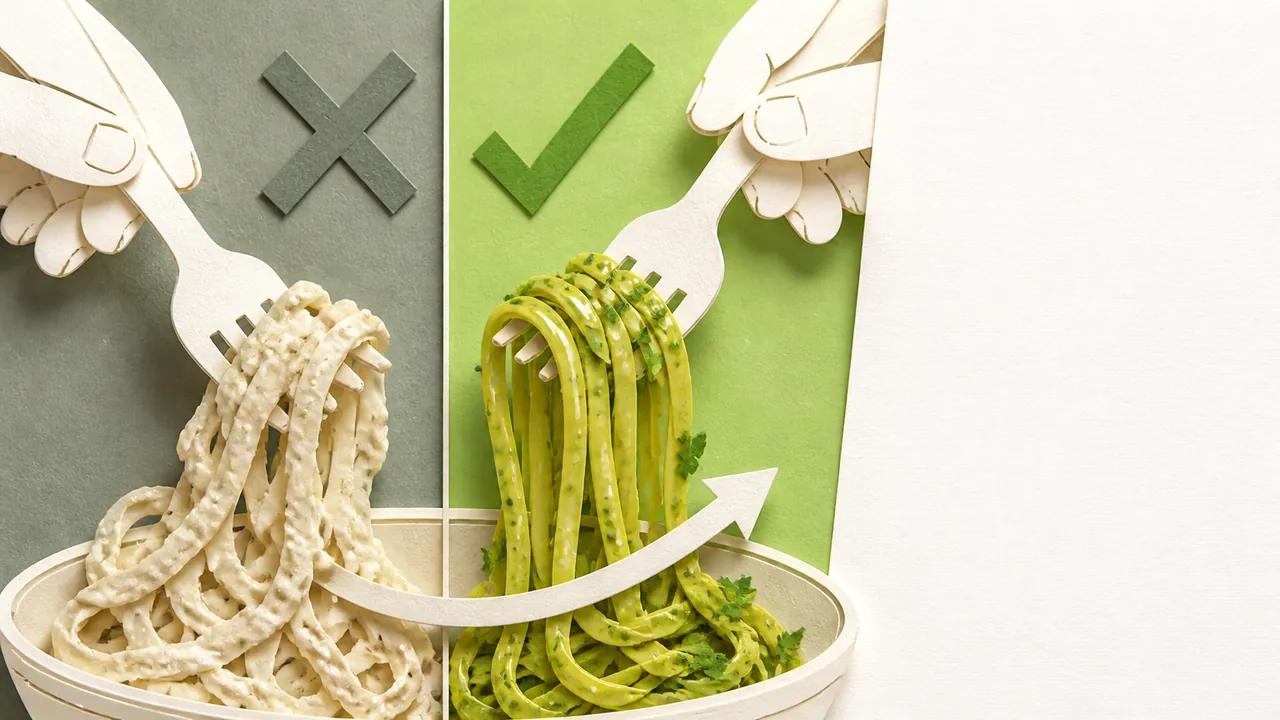
Rinsing = no starch, sauce won't stick
After draining, many cooks run the pasta under cold water to stop the cooking. That's a mistake. The surface starch on cooked pasta is essential: it's what allows the sauce to cling and form an emulsion with the fat. By rinsing, you wash away that starch and cool the pasta down so it can no longer absorb the sauce properly. The only exception: cold pasta for a salad. In that case, rinsing is justified — but only to stop cooking and cool it down quickly.
04 / 06Throwing away the pasta water the liquid gold for your sauce
Fourth mistake: throwing all the cooking water away.
1 cup of pasta water = creamy sauce guaranteed
Pasta cooking water is loaded with soluble starch. That starch has two key properties: it binds the sauce ingredients together, and it creates an emulsion with fat — olive oil, butter, cheese. Result: a smooth, creamy sauce that coats the pasta instead of pooling at the bottom of the plate. How to use it: scoop out one or two large glasses just before draining, then add a little to your sauce while you toss the pasta over medium heat. If the sauce is too thick, add more water. Too oily, same fix. This technique is the foundation of carbonara, cacio e pepe, amatriciana — all the Italian classics use it.
05 / 06Finish in the sauce the professional method
Fifth mistake: not finishing the cooking in the sauce.
2 min early: pasta in the sauce, medium heat
The professional method: drain your pasta two minutes before the indicated cooking time, while it's still slightly firm. Pour it directly into the hot sauce in the pan, add some pasta water, and finish cooking over medium heat while stirring. The pasta absorbs the sauce, the sauce absorbs the pasta's starch — the two become one preparation. That's the difference between pasta with sauce poured on top and pasta that's sauced all the way through.
06 / 06The summary the 6 golden rules
Summary: the six golden rules for cooking pasta.
1L/100g · 10g salt/L · no oil · no rinsing · keep the water · finish in the sauce
The six rules to remember: one litre of water per hundred grams of pasta. Ten grams of salt per litre, added after boiling. Never add oil to the water. Never rinse. Always keep a large glass of pasta water. And finish the pasta in the sauce over medium heat. Apply these six rules once — you'll never go back.
This advice is general information and does not replace a professional's opinion. When in doubt (health, electricity, chemicals), ask a specialist.
Sources
Want more tips like this one?
Subscribe to the channel