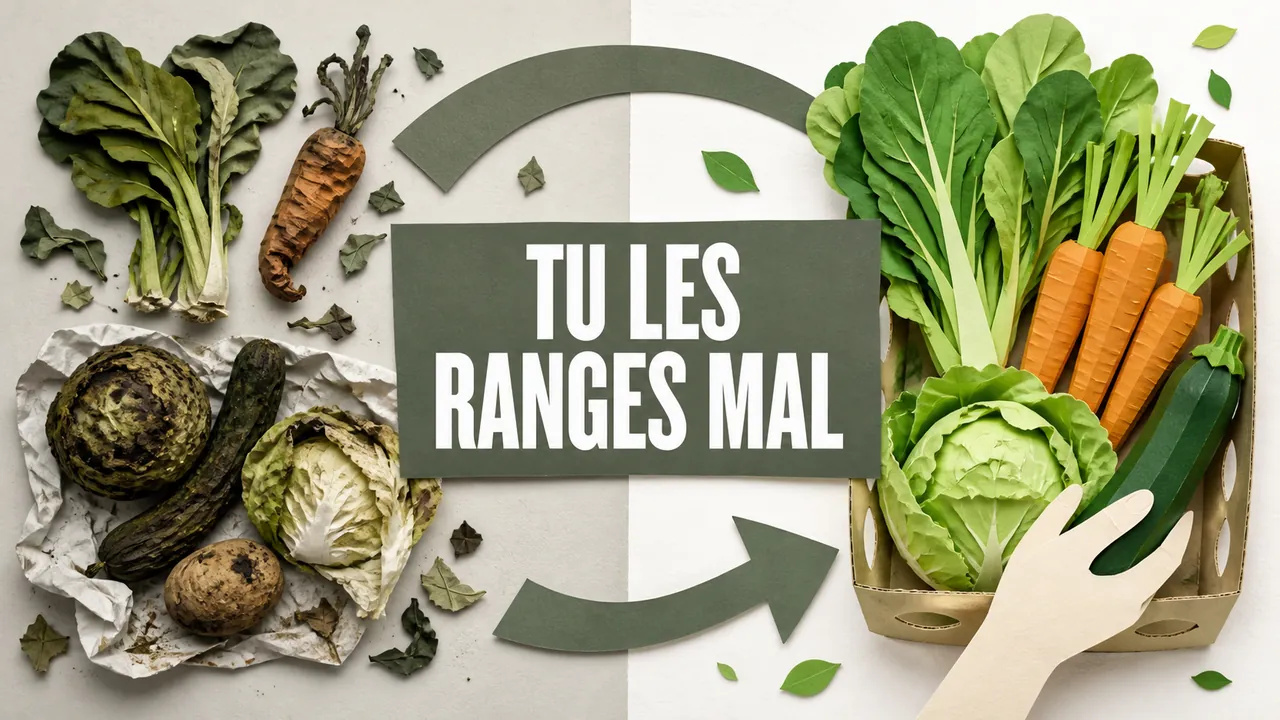
According to ADEME, the average French person throws away thirty kilos of food per year. And a big chunk of those losses come from vegetables stored the wrong way. Not because the vegetables were bad — but because of how they were kept. Here are the five most commonly sabotaged vegetables and the right storage method for each.
01 / 05Lettuce the paper towel trick changes everything
First commonly ruined vegetable: lettuce.
Bag + paper towel = 7 days instead of 2
Lettuce goes bad quickly because the moisture it releases gets trapped inside the bag and accelerates leaf breakdown. The fix is simple: open the bag, slip in one or two paper towels, and reseal it. The paper absorbs the excess moisture and regulates the micro-environment around the leaves. Result: your lettuce stays fresh and crisp for seven days instead of two, with no change in container or storage location.
Option: container + paper at bottom = 10 days
To go further, transfer the lettuce into an airtight container with paper towel at the bottom and another layer on top. The air stays fresh, and moisture is absorbed on both sides. You can reach up to ten days of freshness. And if the leaves have already started to wilt slightly, a five-minute soak in very cold water with a few ice cubes will restore their crunch in minutes.
02 / 05Fresh herbs treat them like a bunch of flowers
Second most wasted vegetable: fresh herbs.
Glass of water + plastic bag = 2 weeks
Most people dump their fresh herbs into a fridge drawer or leave them in the original bag. In three or four days, they've turned black and limp. The right method: trim the bottom of the stems slightly, stand them in a glass with two centimeters of water — just like a bouquet of flowers. Cover loosely with a plastic bag to protect from drying out, and keep the glass in the fridge. Change the water every two days. Result: two weeks of freshness for cilantro, parsley, basil, and mint.
03 / 05Carrots the water immersion method
Third classic mistake: storing carrots in the original purchase bag.
Submerged in water in the fridge = 3 weeks
Carrots dehydrate and go limp fast inside their plastic bag, especially if the bag is open or perforated. The fix: transfer them into a tall jar or container filled with cold water. Carrots are made up of water-filled cells — by keeping them submerged, you recreate their natural environment and stop dehydration. Seal tightly and refrigerate. Change the water every five to seven days. Your carrots will stay firm and crisp for up to three weeks — compared to five to seven days in the original bag.
04 / 05Cut avocado lemon juice + plastic wrap on the flesh
Fourth: the cut avocado.
Lemon + plastic wrap on flesh = no browning
A cut avocado turns brown in less than thirty minutes in open air, and within two hours in the fridge without protection. Oxidation of the flesh is unavoidable once it contacts air. The two-step fix: apply a few drops of lemon juice directly onto the flesh — the citric acid slows oxidation — then press plastic wrap directly against the flesh with no air gap. Keep the pit in the half you're storing: it slightly reduces the exposed surface area. Result: twenty-four to forty-eight hours without visible browning.
05 / 05Tomatoes the fridge is killing them
Fifth mistake, and the most common: putting tomatoes in the fridge.
Whole tomatoes → out of the fridge, stem down
Putting tomatoes in the fridge seems logical. But it's one of the worst storage mistakes you can make. Below twelve degrees Celsius, the cell membranes inside the tomato break down. The flesh turns mealy, tasteless, and watery. And the aromatic compounds — the ones that give tomatoes their flavor — evaporate irreversibly. Whole tomatoes should always stay at room temperature, stem-side down to prevent oxygen from entering through the stem scar. Away from direct light, they'll keep for a week with their full flavor intact.
Cut tomatoes: plastic wrap + fridge = 2 days max
There is one exception to the rule: cut tomatoes. Once the flesh is exposed, bacterial contamination becomes the main risk. In that case only, cover the cut side with plastic wrap and refrigerate. Consume within forty-eight hours. And to recover some of the flavor, take the cut tomato out of the fridge thirty minutes before eating — ambient warmth slightly reactivates the aromatic compounds.
This advice is general information and does not replace a professional's opinion. When in doubt (health, electricity, chemicals), ask a specialist.
Sources
Want more tips like this one?
Subscribe to the channel