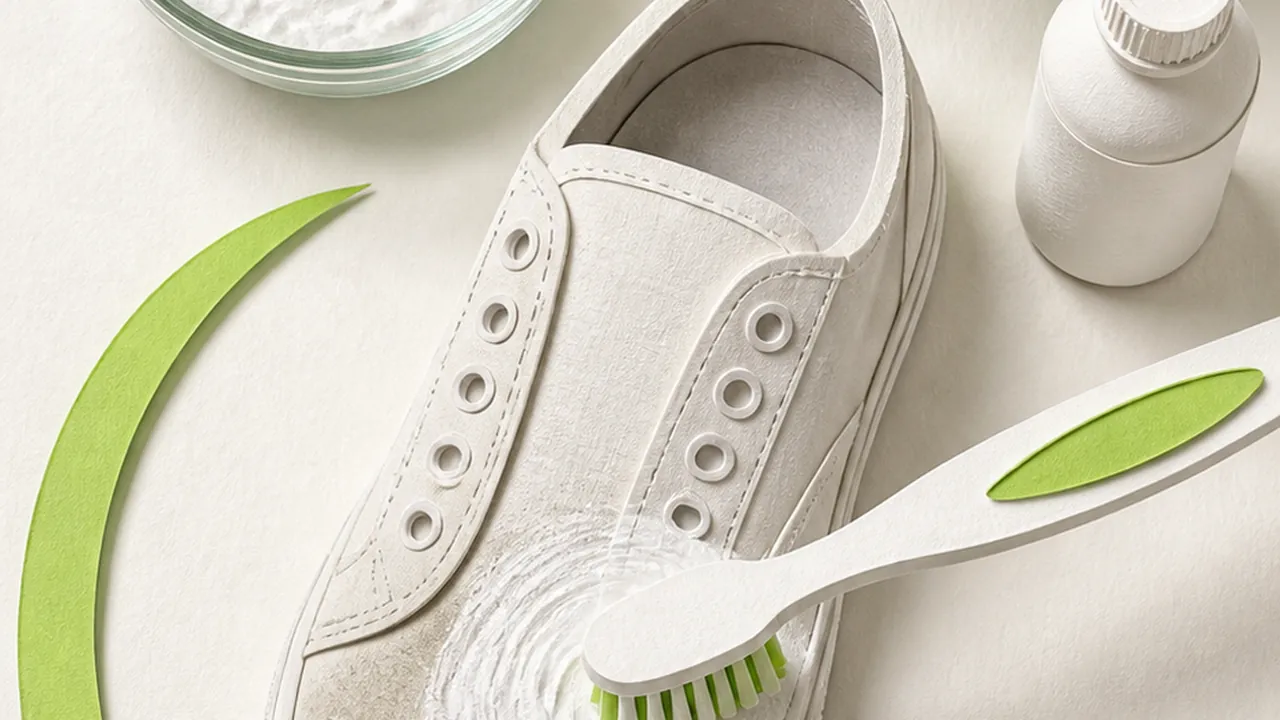
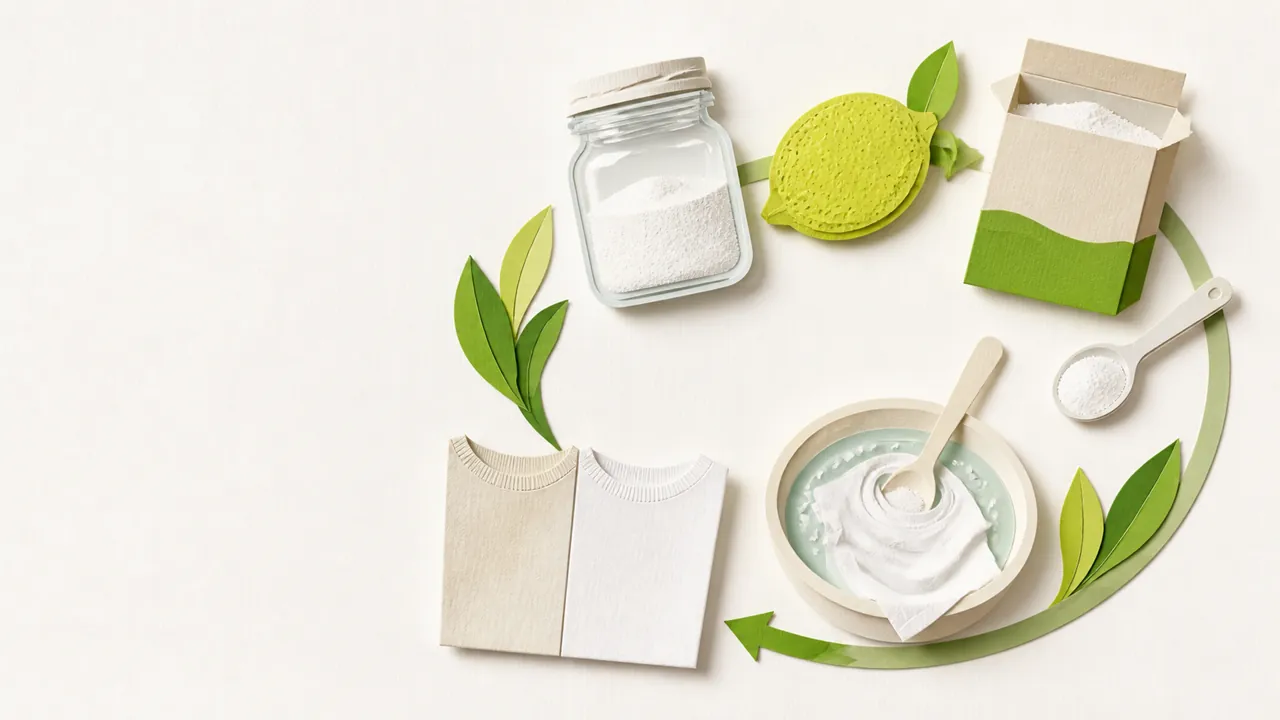
Your whites coming out more yellow than when they went in? You're not alone. And contrary to what most people think, bleach isn't the answer: it attacks fibers at a deep level and speeds up their aging. Here are four natural methods — validated by independent consumer labs — to bring back brilliant whites without damaging your clothes.
01 / 04Why does it yellow? the real causes of yellowing
First, let's understand why white laundry turns yellow.
Sweat + limescale = buildup in the fibers
Sweat is the number one cause. The proteins and acids in sweat penetrate cotton fibers and bond there under the heat of the machine. The result: a persistent yellow-beige tint, especially under the arms and around the collar. Add to that the limescale from tap water: it deposits inside the fibers and gradually makes them look dull and off-white.
Too much detergent = residue = yellowing
The second cause, less widely known: using too much detergent. When you add too much, the machine can't rinse it all out. The residue builds up in the fibers and, with the heat of drying, it yellows. It's a vicious cycle: the more detergent you add trying to whiten, the faster you accelerate the yellowing. The fix starts with measuring your detergent correctly.
02 / 04Percarbonate the most effective method
Method one: sodium percarbonate.
2 tbsp in 50°C water — soak 1 hour
Sodium percarbonate is the most powerful natural bleaching agent. It releases active oxygen when it contacts hot water, and that oxygen breaks down organic stains — sweat, proteins, tannins. How to use it: two tablespoons in a basin of fifty-degree water. Submerge your whites and soak for one hour. For stubborn cases, extend to two hours. Consumer lab testing ranks it as the most effective treatment against yellowing, ahead of every chemical product on the market.
Machine wash at 30°C — no bleach needed
After soaking, machine wash at thirty degrees — no bleach or other chemicals needed. The percarbonate has already done the heavy lifting. The machine cycle is just for rinsing and finishing. For regular maintenance, you can also add one tablespoon of percarbonate directly to the detergent drawer with each white laundry load — it prevents yellowing without any pre-treatment.
03 / 04Baking soda + vinegar gentle on delicate fabrics
Method two: baking soda and white vinegar.
2 tbsp baking soda in the detergent drawer
Baking soda is a gentler alternative, perfect for delicate fabrics like linen, viscose, or fine cotton. Add two tablespoons directly to the detergent drawer. Baking soda regulates the pH of the wash water, which improves your detergent's effectiveness while neutralizing sweat odors trapped in the fabric. The whitening effect is less intense than percarbonate, but it's sufficient for regular maintenance.
100ml white vinegar in the softener slot
Complete the method with a hundred milliliters of white vinegar in the softener compartment. The smell disappears completely when drying — no risk of your clothes smelling like vinegar. But the vinegar dissolves detergent residue accumulated in the fibers and fights limescale deposits. Together, baking soda and vinegar form a duo that eliminates both internal and external causes of yellowing. Never put both in the same compartment at the same time — baking soda in the detergent slot, vinegar in the softener slot, sequentially during the wash cycle.
04 / 04Lemon + prevention the natural hack and 3 key habits
Method three: lemon and sunlight. Plus the prevention habits.
Lemon on the stain → sunlight 2h → cold rinse
For localized stains — armpits, collar — the lemon-and-sun trick is remarkably effective and requires nothing you need to buy. Squeeze fresh lemon juice directly onto the yellowed area, rub gently to help it penetrate, then lay the garment flat in direct sunlight for two hours. Citric acid reacts with UV rays through photo-oxidation: it breaks the chemical bonds of the molecules causing the yellowing. Then rinse with cold water — never hot, which would set the residue. This method also works on linen and delicate fabrics.
30°C max — right dose — air dry
Finally, three prevention habits so you never face yellowing again. First habit: wash whites at thirty degrees maximum. Heat bonds sweat proteins into the fabric instead of removing them — counterintuitive but well-documented. Second habit: measure your detergent correctly, always below the maximum indicated, especially with soft water. Third habit: air-dry rather than using a tumble dryer. The intense heat of the dryer oxidizes fibers and accelerates yellowing. Apply these three habits consistently, and your whites will last two to three times longer.
This advice is general information and does not replace a professional's opinion. When in doubt (health, electricity, chemicals), ask a specialist.
Sources
Want more tips like this one?
Subscribe to the channel