In France, phone scam reports rose by forty percent in one year according to Cybermalveillance.gouv.fr. Vishing, fake tech support, fake parcel texts, bank number spoofing — the methods evolve and get more convincing. But they all share one trait: they rely on urgency and surprise. This video gives you the tools to recognize them, dodge them, and know what to do if you've already been caught.
01 / 04Active scam traps what's happening right now
First section: the five most active phone scam types right now, and how they work.
Never call back an unknown number
Rule one, the most important: if you get a missed call from an unknown number, don't call back. The premium rate number trap works exactly like this. The number often starts with 0899, 0892, or 089 — each minute of return call costs between one euro fifty and three euros, billed automatically. Scammers intentionally let it ring once or twice to bait you. Simple rule: if it's important, your contact calls again. Otherwise, search the number on SignalArnaques.fr before doing anything.
Vishing and fake tech support
Vishing is voice phishing. Someone pretends to be your bank, Microsoft support, or social services. The script is always the same: an urgent problem on your account or device, you need to act now. That manufactured urgency is the signal. Your real bank will never ask for your PIN, your password, or a verification transfer over the phone. Never.
Fake parcels and bank spoofing
Two more scams on the rise. The fake parcel SMS: you get a text saying a parcel is held and you must pay fees via a link. That link steals your payment details. Postal services and couriers never ask for payment by text. Second: bank number spoofing. The caller displays your bank's official number — but it's faked. If anyone calls from your bank asking you to act immediately, hang up and dial the number on the back of your card yourself.
02 / 04Spot the trap the right instincts in thirty seconds
Second section: how to spot a scam in thirty seconds — before giving anything away.
Check the number on SignalArnaques.fr
Habit number two: SignalArnaques.fr. Enter the phone number and in ten seconds you know if others have already flagged it. The database is updated in real time, community-driven. If you received a suspicious call yourself, you can report it — you protect others. The platform also tracks fraudulent SMS. Free, no account needed, mobile-friendly. Bookmark it now.
4 red flags to spot
Four signals that give away a phone scam. First: extreme urgency — act within the hour or your account is frozen. Second: request for sensitive info — PIN, password, full card number. Your bank will never ask for these. Third: request for an immediate transfer or payment to secure an account. Fourth: emotional pressure — guilt, fear, threat of legal consequences. The moment any of these appear, hang up. You can always call the organization back using the number on their official website, never the one that called you.
03 / 04Protection tools free and effective
Third section: free tools to cut the volume of unwanted calls before they even reach you.
Enable your carrier's call filtering
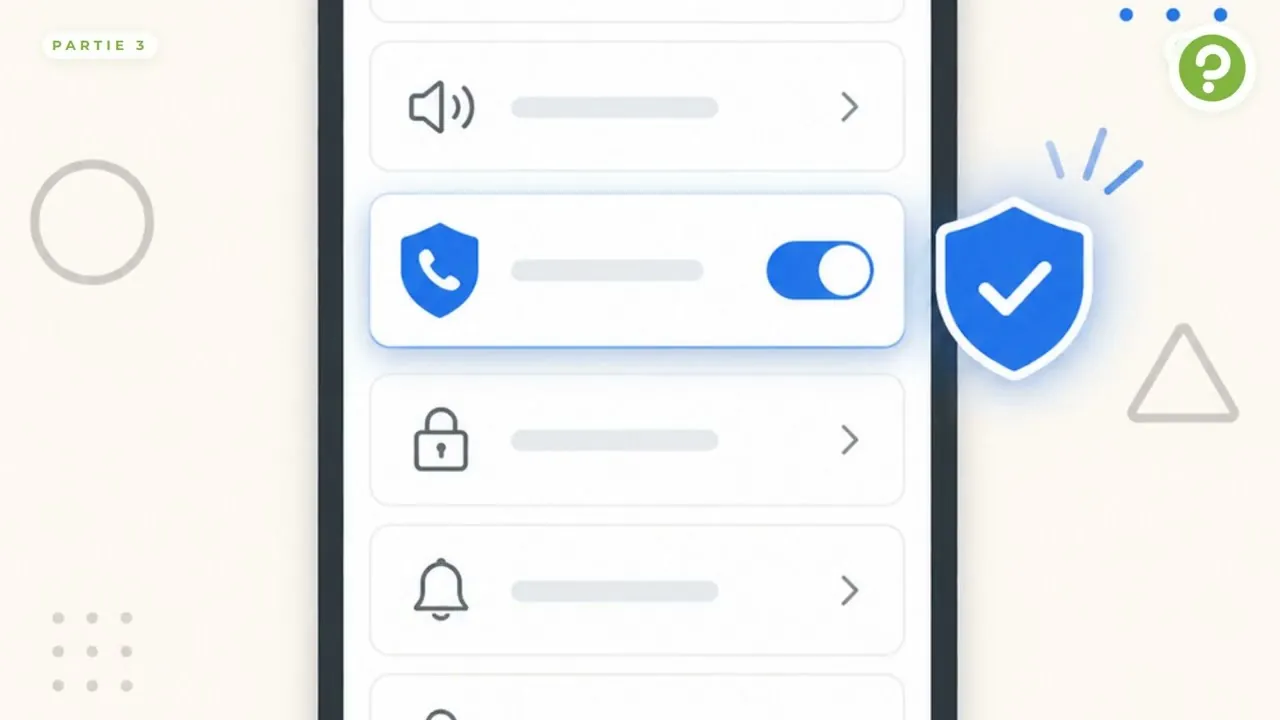
Third protection: your carrier's call filtering. Orange, SFR, Bouygues, and Free all offer anti-spam options in their online account portals — sometimes called Call filter, Number blocking, or Anti-solicitation. Free, two minutes to configure, and it automatically blocks the premium rate number ranges most used by scammers. On iPhone, you can also enable Silence Unknown Callers in your Phone settings. On Android, the Google Phone app includes a spam filter. These tools don't block one hundred percent of scams, but they cut the volume significantly with zero effort.
Register on Bloctel.gouv.fr
If commercial solicitations are overwhelming you, register on Bloctel.gouv.fr — France's official no-call registry. Free registration, up to twenty phone numbers. Companies doing legitimate telemarketing are required to check this list before calling. It doesn't stop scammers who ignore the law, but it cuts the overall volume. And if a company calls you anyway after registration, you can report the violation on the site — fines reach up to seventy-five thousand euros.
04 / 04If you're targeted the right moves to limit the damage
Fourth section — for those who already shared information or made a transfer: the steps to take immediately to limit the damage.
Report immediately
If you shared information or made a transfer, act fast. First reflex: call your bank immediately to report the incident and block your card if needed — the emergency number is on the back of your card. Second: report the scam on Cybermalveillance.gouv.fr. Even if you lost nothing, every report helps map active scams and warns others. Third: flag the number on SignalArnaques.fr. The faster reports come in, the faster fraudulent number ranges can be blocked.
Steps to get reimbursed
If you were victim of a fraudulent transfer, you may in certain cases be reimbursed. French law requires your bank to refund unauthorized transfers if you weren't grossly negligent. In practice: if you personally validated a strong authentication knowing something felt wrong, reimbursement may be denied. But if the number was spoofed and you genuinely believed you were speaking to your real bank, case law has often sided with the customer. First contact your bank in writing, keep all evidence. If refused, refer to the Médiateur bancaire — a free, independent service with a two-month response time.
This advice is general information and does not replace a professional's opinion. When in doubt (health, electricity, chemicals), ask a specialist.
Sources
Want more tips like this one?
Subscribe to the channel